

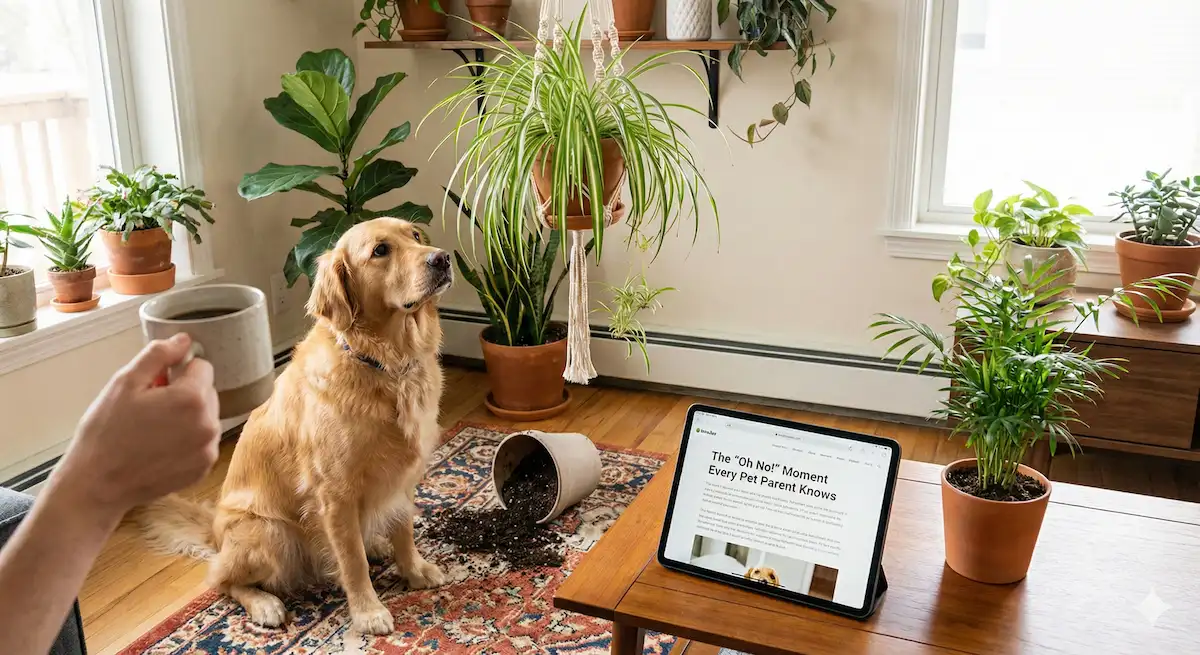
We’ve all been there. You walk into the living room, coffee in hand, only to find your beloved golden retriever or curious tabby chewing on the lush green leaves of your favorite potted plant. Your heart drops. Is it poisonous? Do I need to rush to the vet?
I remember the first time this happened to me. I caught my cat, Bella, happily munching on a lily I had just bought. I didn’t know back then how dangerous lilies were for cats (spoiler: extremely dangerous). That panic-filled trip to the emergency vet changed how I decorate my home forever.
Creating a green sanctuary shouldn’t mean compromising your pet’s safety. The good news? You can have the best of both worlds.
In this guide, I’m sharing the Top 7 Pet-Safe Houseplants That Are Beautiful and Non-Toxic. These picks are safe for cats and dogs, thrive in typical Western homes, and look absolutely stunning.
Why Going “Non-Toxic” Matters More Than You Think
It’s not just about avoiding a vet bill. It’s about peace of mind. Pets, especially bored ones during the winter months, explore the world with their mouths. Even if a plant isn’t deadly, toxic plants can cause nasty skin irritations or upset stomachs that ruin your rugs and your weekend.
Choosing pet-safe flora allows you to place greenery on floor stands, coffee tables, or low shelves without constantly looking over your shoulder.
Note: While these plants are non-toxic, it’s still best to discourage your pets from eating them. Eating too much of any plant matter can still cause a mild tummy ache, even if it’s not poisonous.
1. The Resilient Spider Plant (Chlorophytum comosum)
If you are a beginner, start here. The Spider Plant is the MVP of pet-safe greenery. It’s virtually unkillable and adds a fun, retro vibe to any room.
Why it works: The long, arching leaves look great in a hanging basket or on a high shelf in your home office. They produce cute “spiderettes” (baby plants) that you can propagate easily.
- Light: Bright, indirect light is best, but they handle low light well.
- Water: Keep soil slightly moist. Don’t let it get soggy.
- Pet Note: Some cats find the dangling leaves irresistible toys. It’s safe if they nibble, but try to hang it out of “batting range” to keep the plant looking tidy.
2. Boston Fern (Nephrolepis exaltata)
Nothing says “lush jungle” quite like a Boston Fern. These voluminous beauties are perfect for filling up empty corners or adding softness to a stark room.
Why it works: They are fantastic natural humidifiers. In dry winter months, they help add moisture to the air, which is great for both your skin and your pets’ respiratory health.
- Light: They love filtered light. A north-facing window is ideal.
- Water: These guys are thirsty. Keep the soil consistent—never let it dry out completely.
- Styling Tip: Place one on a pedestal stand in your bathroom. The steam from your shower will make it incredibly happy.
3. Calathea (Calathea spp.)
Want a pop of pattern? Calatheas, often called “Prayer Plants,” have stunning foliage with stripes, spots, and deep purple undersides.
Why it works: They move! You’ll notice the leaves folding up at night (like prayer hands) and opening in the morning. It’s a fascinating bit of nature to watch.
- Light: Low to medium indirect light. Direct sun will scorch their beautiful patterns.
- Water: Use filtered or distilled water if possible; they are sensitive to tap water chemicals.
- Pet Note: Since these are often floor plants or table plants, ensure your heavy planters are stable so a wagging tail doesn’t knock them over.
4. Money Tree (Pachira Aquatica)
Looking for a large floor plant that isn’t a Fiddle Leaf Fig (which is toxic)? Meet the Money Tree. It’s said to bring good luck and fortune, which is a nice bonus!
Why it works: With its braided trunk and palm-like leaves, it adds immediate structure and height to a room. It fits perfectly in modern living rooms or beside a cozy reading chair.
- Light: Bright, indirect light.
- Water: Water deeply, but let the top 2-3 inches of soil dry out before watering again. They hate “wet feet.”
- Size: These can grow up to 6 feet tall indoors, making a great statement piece.
5. Parlor Palm (Chamaedorea elegans)
Bring a bit of the Victorian parlor vibe into your modern home. Unlike the Sago Palm (which is highly toxic), the Parlor Palm is completely safe for your furry friends.
Why it works: It grows slowly and stays relatively compact, making it great for apartments or smaller dining rooms. It’s elegant and wispy.
- Light: Adapts well to low light.
- Water: Forgiving if you forget to water it occasionally.
- Pet Note: The fronds can be tempting for cats to swat at. I keep mine on a sturdy side table.
6. Polka Dot Plant (Hypoestes phyllostachya)
If you are tired of just green, the Polka Dot Plant brings the color! Available in pink, red, and white splashes, it’s a cheerful addition to any windowsill.
Why it works: It’s small and cute. Perfect for a kitchen windowsill or a desk setup. It adds contrast against your other green plants.
- Light: Bright, indirect light keeps the colors vibrant. Low light will make them fade to green.
- Water: Keep the soil consistently moist. If it wilts, water it, and it usually perks right back up.
7. Burro’s Tail (Sedum morganianum)
Succulents can be tricky because many (like Aloe Vera and Jade) are toxic. But the Burro’s Tail is a safe, trailing succulent that looks amazing in a hanging basket.
Why it works: The thick, fleshy leaves cascade down like braided tails. It’s a texture lover’s dream and looks great in a mudroom or sunroom with high ceilings.
- Light: Loves bright, sunny spots.
- Water: Drought tolerant. Water sparingly—only when the soil is bone dry.
- Care Tip: The leaves fall off easily if bumped, so hang this one where it won’t get jostled by passing traffic (human or animal).
Tips for Coexisting with Pets and Plants
Even with non-toxic plants, you want to keep your greenery safe from digging paws and teeth. Here are a few tricks I use in my own home:
- Go High: Use floating shelves or ceiling hooks for trailing plants. It keeps floor space clear for dog beds and play areas.
- Citrus Peels: Most cats hate the smell of citrus. Placing some lemon or orange peels on top of the soil can act as a natural deterrent.
- Dedicated “Pet Grass”: Sometimes pets chew plants because they crave greens. Grow a small pot of wheatgrass specifically for them. It saves your decor!
Key Takeaways
- Safety First: Always double-check plant toxicity before bringing it home. The ASPCA website is a great resource.
- Variety: You don’t have to stick to boring plants. Ferns, Palms, and Succulents all have safe options.
- Placement: Use stands and hangers to protect both the plant and the pet.
FAQ: Pet-Safe Houseplants
Q: Are all succulents pet-safe? No! Popular ones like Aloe Vera, Jade Plants, and Kalanchoe are toxic. Stick to Burro’s Tail, Hens and Chicks, or Haworthia.
Q: My cat ate a Spider Plant and threw up. Is it toxic? Technically, no. Spider plants are hallucinogenic to cats in a mild way (like catnip) and can cause an upset stomach if they eat too much, but it is not toxic or life-threatening.
Q: Can I use fertilizer on pet-safe plants? Yes, but be careful. Freshly applied liquid fertilizer can be harmful if a pet licks the soil. Use organic options or keep pets away until the water has fully absorbed.
Ready to Green Up Your Home?
Building an indoor garden doesn’t mean putting your best friend at risk. Start with one of these top 7 pet-safe houseplants and see how much life it brings to your space.
Do you have a favorite pet-friendly plant I missed? Or a funny story about your pet vs. a plant? Share it in the comments below—I’d love to hear from you!
Post By SJ Sinan

Leave a Comment