

I remember the first time I brought home a beautiful, leafy fern. I named him “Fernando.” I put him right on my sunny windowsill, watered him every single day with love, and told myself, “This is it. I am finally a plant person.”
Two weeks later, Fernando was a crispy, brown stick figure.
If you have a similar graveyard of indoor plants in your past, please stop beating yourself up. You are not cursed, and you don’t lack a “green thumb.” The truth is, most beginners kill their plants simply because they love them too much. We overwater, we fuss, and we try to force a jungle plant to live in a dark corner behind the sofa.
Keeping greenery alive doesn’t require a degree in botany. It just requires understanding a few basic rules. In this guide, I’m going to break down exactly how to stop the carnage and help your green friends thrive.
Why Your Indoor Plants Keep Dying (It’s Not Your Fault)
First, let’s clear the air. The biggest reason people struggle with indoor plants isn’t neglect; it’s usually mismatched expectations. We buy a plant because it looks good on Instagram, not realizing it hates the dry air in our living room or needs way more light than we can offer.
Plants are resilient, but they are also creatures of habit. When you bring them from a perfect, humid greenhouse into your home, they go into shock. Your job isn’t to be a wizard; it’s just to mimic their natural environment as closely as possible without driving yourself crazy.
Let’s look at the specific habits that might be sabotaging your efforts and how to fix them.
The Water Myth: Stop Drowning Your Greens
If I could shout one thing from the rooftops, it would be this: Overwatering kills more plants than underwatering.
When you see a plant looking sad or droopy, your instinct is probably to grab the watering can. It feels like the caring thing to do. But for most indoor plants, this is a death sentence. When soil is constantly soggy, the roots can’t breathe. They rot, and once root rot sets in, it’s game over.
The Finger Test (The Only Tool You Really Need)
Forget about sticking to a strict schedule like “water every Monday.” Your plant doesn’t know it’s Monday. Instead, use the finger test.
Stick your index finger about 2 inches deep into the soil.
- Is it wet? Walk away. Do not water it.
- Is it dry? Now you can water.
I used to kill every succulent I owned until I realized they thrive on neglect. Now, I ignore them for weeks, and they have never looked better.
Lighting: It’s Not Just About “Bright” vs. “Dark”
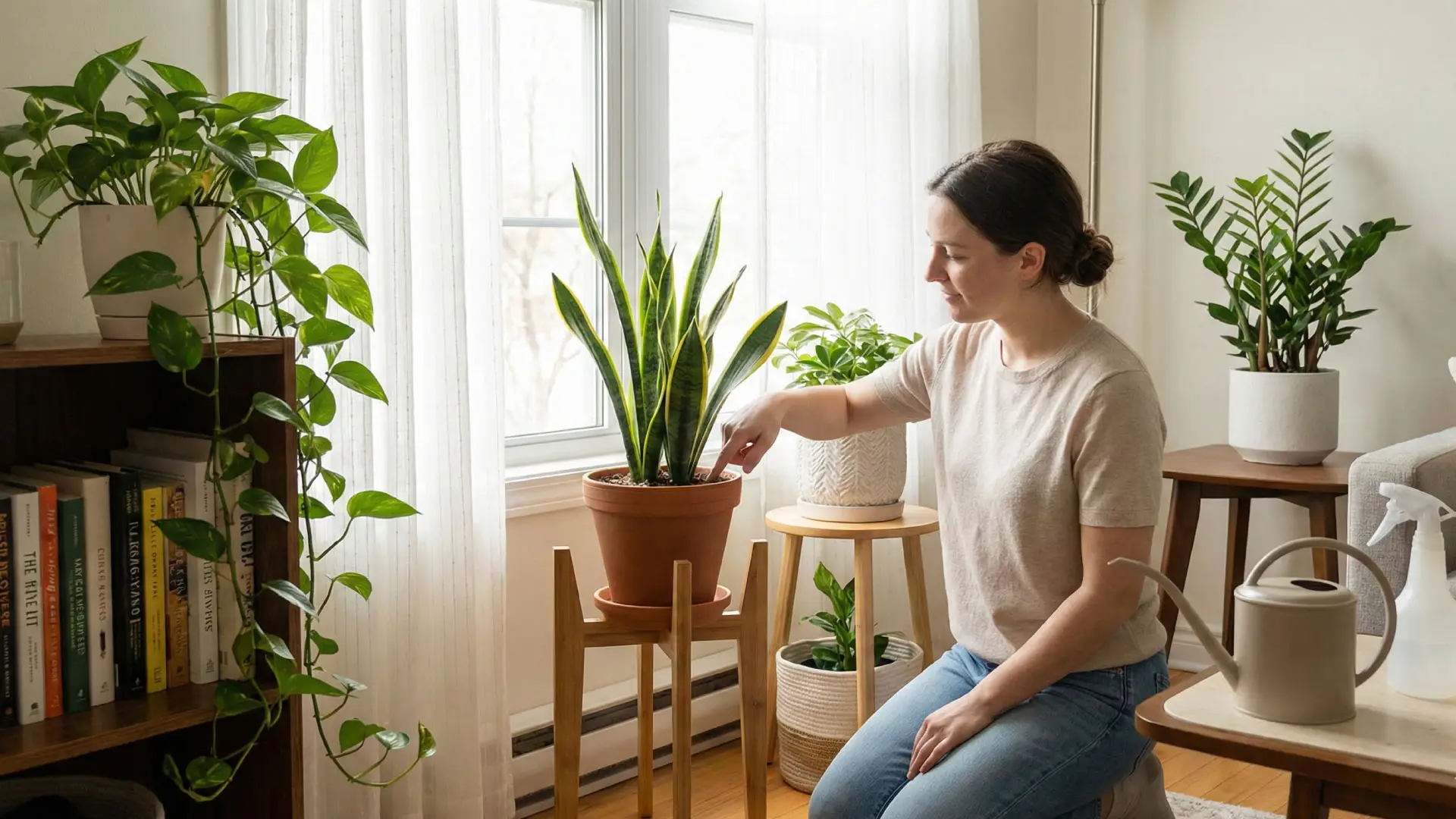
Light is food for plants. Without it, they starve. But the terms “bright indirect light” or “low light” can be incredibly confusing for beginners.
Here is the breakdown in plain English:
- Direct Light: This is the sun hitting the leaves directly, usually from a south-facing window (if you are in the Northern Hemisphere). Only cacti and succulents usually love this scorching heat.
- Bright Indirect Light: Think of a spot near a sunny window, but filtered through a sheer curtain. Or, a spot a few feet away from the glass. Most popular indoor plants, like Monsteras and Pothos, crave this.
- Low Light: This means a spot further back in the room or a north-facing window. Please note: “Low light” does not mean “no light.” If you can’t read a book comfortably in that corner at noon without a lamp, a plant won’t survive there.
If your apartment is like a cave, don’t lose hope. You can always supplement with artificial lights.
The Potting Problem: Drainage is Non-Negotiable
I once bought a gorgeous ceramic pot from a boutique store. It looked amazing on my shelf. But it had one fatal flaw: no hole in the bottom.
If your pot doesn’t have drainage holes, water has nowhere to go. It pools at the bottom, creating a swamp that rots the roots of your indoor plants.
The fix is simple:
- Double Potting: Keep the plant in the ugly plastic nursery pot (which has holes) and slip that inside the decorative ceramic pot. When you water, take the plastic pot to the sink, let it drain, and then put it back.
- Drill It: If you are handy, grab a ceramic drill bit and make a hole yourself.
Humidity: The Silent Killer in Winter
If you live in the USA, Canada, or Europe, you know how dry the air gets when the central heating kicks on in winter. While we feel cozy, our tropical plants feel like they are in a desert.
You might notice the tips of the leaves turning brown and crispy. That is a cry for humidity.
You don’t need to turn your home into a sauna, though. Here are a few tricks:
- Group plants together: Plants release moisture through their leaves. Huddling them together creates a micro-climate of humidity.
- The Pebble Tray: Place your pot on a tray filled with pebbles and water. Make sure the pot sits on the pebbles, not in the water. As the water evaporates, it humidifies the air right around the plant.
- Mist lightly: A spray bottle can help, but it’s a temporary fix.
Choosing the Right Survivors
If you are a beginner, stop buying Fiddle Leaf Figs. Just stop. They are the divas of the plant world. If you look at them wrong, they drop a leaf.
To build your confidence, start with indoor plants that are practically indestructible.
1. Snake Plant (Sansevieria)
This is the tank of the plant world. It tolerates low light and can go weeks without water. In fact, it prefers to be ignored. I have one in a dark corner of my hallway that I water once a month, and it keeps growing.
2. ZZ Plant
Similar to the Snake Plant, the ZZ plant is incredibly tough. It has shiny, waxy leaves that look great in modern decor. It’s perfect for offices or basements with less natural light.
3. Pothos (Devil’s Ivy)
If you want that trailing, jungle vibe, get a Pothos. They grow fast and communicate clearly. When a Pothos is thirsty, it droops dramatically. You water it, and an hour later, it perks right back up. It’s very satisfying.
Troubleshooting Common Freaking-Out Moments
Even with the best care, things happen. Here is how to handle the panic moments without tossing the plant in the trash.
Yellow Leaves
Don’t panic. Old leaves turn yellow and fall off naturally to make room for new growth. However, if many leaves turn yellow at once, check the soil. Is it soggy? You are likely overwatering. Is it bone dry? You might have waited too long.
Brown Tips
As mentioned earlier, this is usually a humidity issue or inconsistent watering. Snip the brown bits off with clean scissors (follow the natural shape of the leaf) and increase humidity.
Bugs (The Gross Part)
If you see tiny flies buzzing around the soil, those are likely fungus gnats. They love wet soil. Let the soil dry out completely between waterings, and they usually disappear. If you see white cotton-like fluff on the stems, that’s mealybugs. Wipe them off with a Q-tip dipped in rubbing alcohol.
The Routine: Keep It Simple
You don’t need a complex spreadsheet to manage your indoor plants. I suggest “Plant Sundays.”
Every Sunday morning, take your coffee and do a quick tour.
- Check the soil with your finger.
- Rotate the pots so they grow evenly (plants lean toward the light).
- Dust the leaves. Yes, dust blocks sunlight! A quick wipe with a damp cloth keeps them efficient and shiny.
Final Thoughts: It’s a Journey, Not a Science Experiment
Killing a plant is a rite of passage. It teaches you what went wrong. Maybe that corner was too dark, or maybe you loved that fern a little too much with the watering can. It’s okay.
The joy of having indoor plants comes from watching a new leaf unfurl or seeing a vine finally reach the bookshelf. It brings life, oxygen, and a sense of calm to your home.
So, go ahead and try again. Start with a Snake Plant or a Pothos. Put your finger in the soil before you water. And remember, we are aiming for progress, not perfection. Your indoor jungle is waiting.
Post By SJ SINAn

Leave a Comment