

I was scrolling through my social media feed the other morning, sipping coffee, when I noticed something interesting. It wasn’t a celebrity scandal or a political debate. It was a picture of a friend of mine living in a cramped apartment in downtown Manhattan. She was proudly holding a basket of homegrown cherry tomatoes.
Five years ago, she wouldn’t have known the difference between a trowel and a spade. But today? She is part of a massive global wave.
Something huge is happening in the world of horticulture. It’s no longer just about retirees pruning roses. From the rooftops of London to the suburban backyards of Sydney and the sprawling estates of Texas, a new era is emerging.
If you have felt the urge to dig in the dirt recently, you aren’t alone. Let’s dive into the biggest gardening trends sweeping the globe right now and what they mean for your own patch of earth.
Why Gardening Trends Are Moving Towards Survival and Sanity
For a long time, gardening was largely aesthetic. It was about having the greenest lawn on the block or the most perfectly shaped hedges. But looking at the data from the last two years, the script has flipped.
Current gardening trends indicate a shift toward functionality and mental health. We aren’t just growing plants to look at anymore; we are growing them to eat, to heal the planet, and honestly, to keep ourselves sane in a chaotic world.
I spoke with a nursery owner in Oregon recently, and he told me he can’t keep fruit trees in stock. People are worried about grocery prices, supply chains, and pesticide use. This global anxiety has birthed a movement called “Foodscaping.” It is messy, it is productive, and it is beautiful in a completely new way.
The Rise of “Chaos Gardening” and The End of the Manicured Lawn
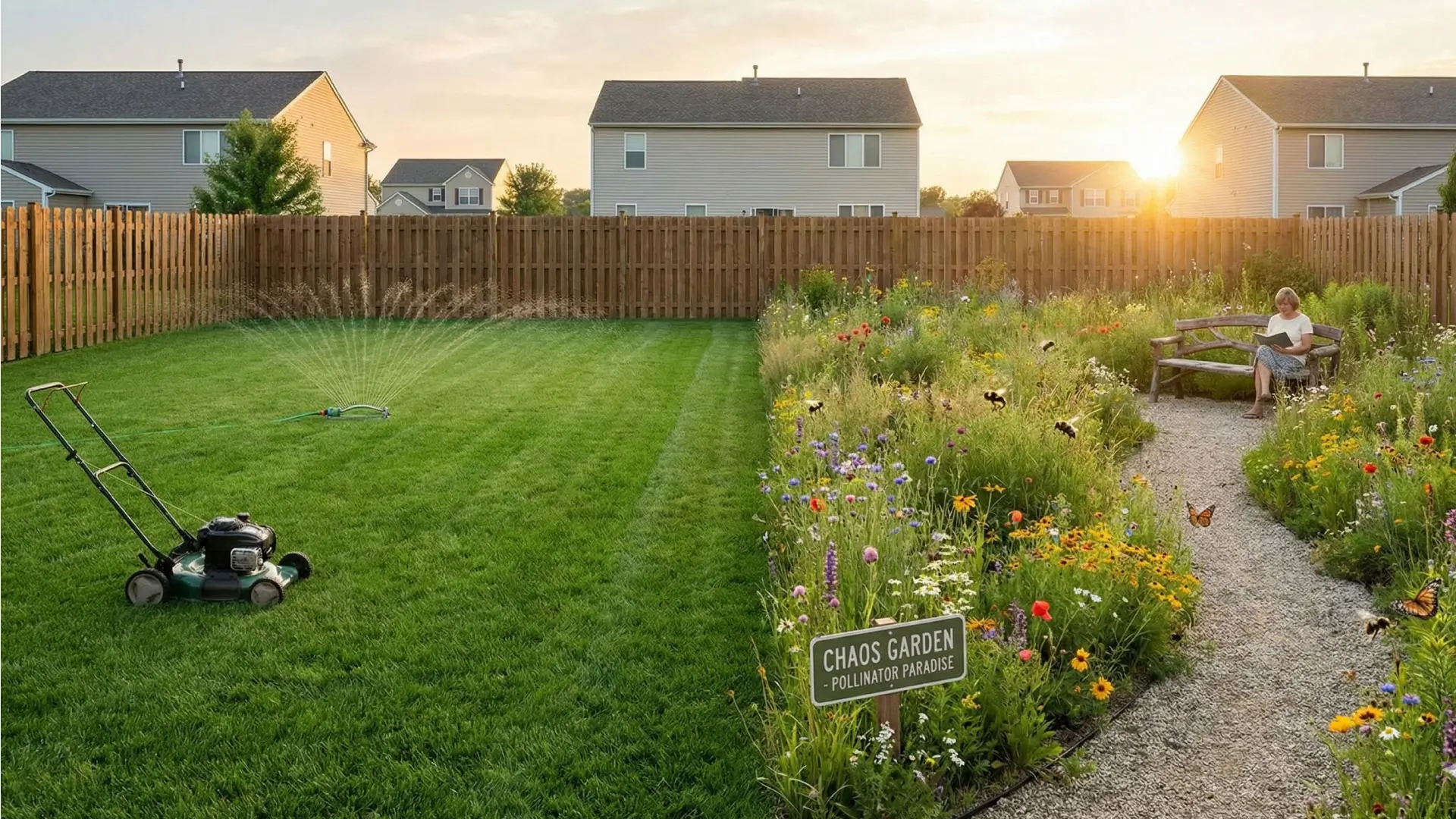
Remember those perfect, carpet-like lawns that required gallons of water and hours of mowing? They are rapidly becoming a thing of the past, especially in drought-prone areas like Australia and the Western United States.
One of the most fascinating gardening trends I’ve tracked is the “Anti-Lawn” movement. In places like California and parts of Europe, homeowners are ripping out thirst-trap grass and replacing it with native ground covers, clover, and wildflowers.
Embracing the Wild
This is often referred to as “Chaos Gardening.” It sounds intense, but it’s actually very chill. You essentially toss seeds of native wildflowers into your soil and let nature take the wheel.
I tried a version of this in a small 4×4 foot patch in my backyard last year. I stopped mowing it and threw in a wildflower mix. By mid-summer, it was buzzing with bees and butterflies. It wasn’t “neat,” but it was alive.
If you have a mudroom that opens out to the backyard, imagine stepping out not onto a flat green sheet, but into a meadow. It saves water, helps pollinators, and requires zero mowing.
The “Grocery Store” in Your Living Room
Let’s talk about the urban jungle. Not everyone has a half-acre lot. In fact, more people live in cities now than ever before. This demographic shift has forced gardening trends to go vertical and indoors.
High-Tech Hydroponics
In tech-forward hubs like San Francisco and Tokyo, smart gardens are exploding. These are countertop units that grow lettuce and herbs using LED lights and water—no soil required.
I visited a friend in a basement apartment in London recently. It was dark and rainy outside, but inside, his kitchen counter was glowing with fresh basil and spinach growing in a smart unit. He didn’t have to worry about the weather or seasons.
The Edible Balcony
For those with a bit of outdoor space, container gardening is getting a serious upgrade. We aren’t just talking about a pot of petunias. People are growing dwarf lemon trees, blueberries, and potatoes in grow bags on 4th-floor balconies.
The key here is using every inch. Hanging baskets for strawberries, railing planters for herbs, and tiered stands for lettuces.
Climate-Resilient Gardening: Adapting to the New Normal
We can’t ignore the weather. Extreme heat, unexpected frosts, and flooding are changing how we plant. This is perhaps the most critical of all current gardening trends.
Gardeners are becoming amateur meteorologists. In the UK, which is traditionally wet, they are seeing scorching summers. In the US South, unexpected freezes are killing tropical plants.
The Shift to Native Plants
The solution? Going native. Native plants are the special forces of the plant world. They evolved in your specific region, so they know how to handle the local weather tantrums better than some exotic flower imported from three continents away.
If you are planning your garden this year, look for plants labeled “Drought Tolerant” or “Native.” They might not be as flashy as a tropical hibiscus, but they will survive when you go on vacation for two weeks and forget to water them.
The Mental Health Sanctuary
Post-2020, our homes became our entire worlds. We worked, schooled, and relaxed in the same four walls. This created a desperate need for separation.
The garden has become that escape. One of the softer gardening trends is the creation of “Wellness Zones.”
I saw a beautiful example of this in a suburban home near Melbourne. The owners had a small backyard, but they carved out a tiny corner surrounded by tall ferns and bamboo. They put a single comfortable chair there and a small water feature. No phone, no laptop. Just a spot to breathe.
You don’t need a massive budget for this. A secluded bench, a wind chime, and some fragrant lavender can create a sensory retreat just a few feet from your back door.
Dark and Moody: The Goth Garden Trend
On a lighter, more aesthetic note, let’s talk about color. For decades, gardens were all about bright pastels—pinks, yellows, and whites. But a very stylish trend emerging from Europe is the “Goth Garden.”
This involves using plants with dark foliage and flowers. Think black tulips, deep purple heucheras, and dark kale.
Why is this happening? It’s dramatic. Against a modern white farmhouse or a grey fence, these dark plants pop in a sophisticated way. It adds depth and mystery to the landscape. If you want your garden to look like it belongs in a design magazine, try planting a cluster of ‘Queen of Night’ tulips or Black Mondo Grass.
Tech Meets Soil: The Smart Garden Revolution
We have smart fridges and smart doorbells, so naturally, smart gardening trends are next.
We are seeing a rise in automated irrigation systems that sync with local weather reports. If rain is forecast, the sprinkler doesn’t turn on. This is huge for water conservation.
There are also plant sensors you stick in the soil that send a notification to your phone saying, “Hey, I’m thirsty!” or “I need more fertilizer.”
I was skeptical about these at first. I’m old school; I like to touch the dirt. But after installing a simple drip irrigation timer for my vegetable bed, I was converted. My tomatoes have never been happier, and I stopped stressing about watering them during busy work weeks.
Sustainability is No Longer Optional
Finally, the overarching theme of all these global movements is sustainability. We are moving away from chemicals.
Peat-free compost is becoming the standard in the UK and is gaining traction in the US. People are starting their own compost piles to reduce kitchen waste. Rain barrels are being installed under gutter downspouts to catch free water.
It is a return to basics, but with modern knowledge. We are realizing that the soil is a living thing, not just dirt to hold a plant up.
How to Start Integrating These Trends
You don’t need to overhaul your entire property overnight. That is a recipe for burnout (and a sore back).
Start with one meaningful change:
- Pick one crop to grow: Maybe just herbs on the windowsill.
- Stop spraying: Try natural pest control methods first.
- Plant for the bees: Add a few native flowering plants near your entryway or patio.
The world of gardening is changing because we are changing. We want connection—to our food, to nature, and to peace of mind.
Whether you have a sprawling estate or a fire escape, there is room for you in this movement. The most important of all gardening trends is simply showing up and getting your hands dirty.
So, go ahead. Plant something today. You might just find it grows on you.
Post By SJ SINAn

Leave a Comment