

I still remember the day I decided to stop throwing my banana peels in the trash. I was standing in my tiny galley kitchen in Chicago, looking at the garbage bin, and I just felt… guilty. I knew that organic waste in a landfill creates methane, but I was terrified of the alternative.
I thought composting was only for people with big backyards, pitchforks, and a tolerance for bad smells. I imagined my 600-square-foot apartment swarming with fruit flies and smelling like a dumpster on a hot July day.
But I was wrong.
Fast forward to today, and my “garbage” has been cut in half, my houseplants are thriving, and my kitchen smells like fresh coffee, not rotting veggies. If you think you lack the space or the stomach for it, let me change your mind. Apartment composting is cleaner, easier, and arguably more rewarding than doing it outdoors.
In this guide, I’m breaking down how to turn your food scraps into “black gold” right under your sink—without turning your home into a science experiment.
Why Apartment Composting is Easier Than You Think
Let’s tackle the elephant in the room: the “ick” factor. Modern composting isn’t about letting food rot on your counter. It is a controlled process. When done right, it smells like damp earth, like a forest floor after rain.
Apartment composting is all about choosing the right method for your lifestyle. Are you a hands-off person? Do you want a pet project (literally)? Or do you just want the scraps gone?
There are three main ways to do this in a small space, and none of them require a backyard.
Method 1: The “Collect and Drop” (The Easiest Route)
If you have zero interest in managing dirt or worms, this is for you. Many cities in the US and Europe now have compost drop-off programs at local Farmers Markets or community gardens.
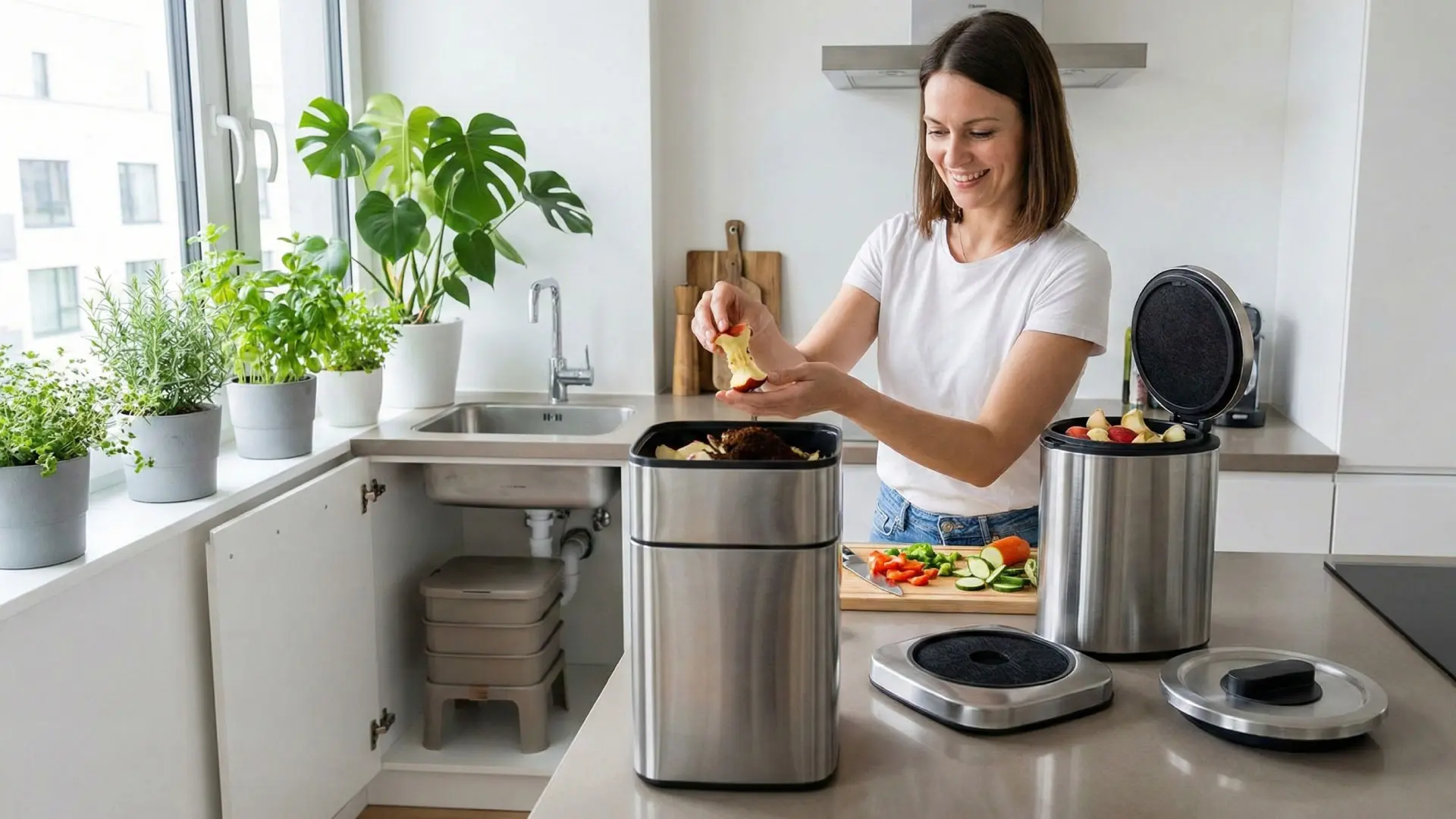
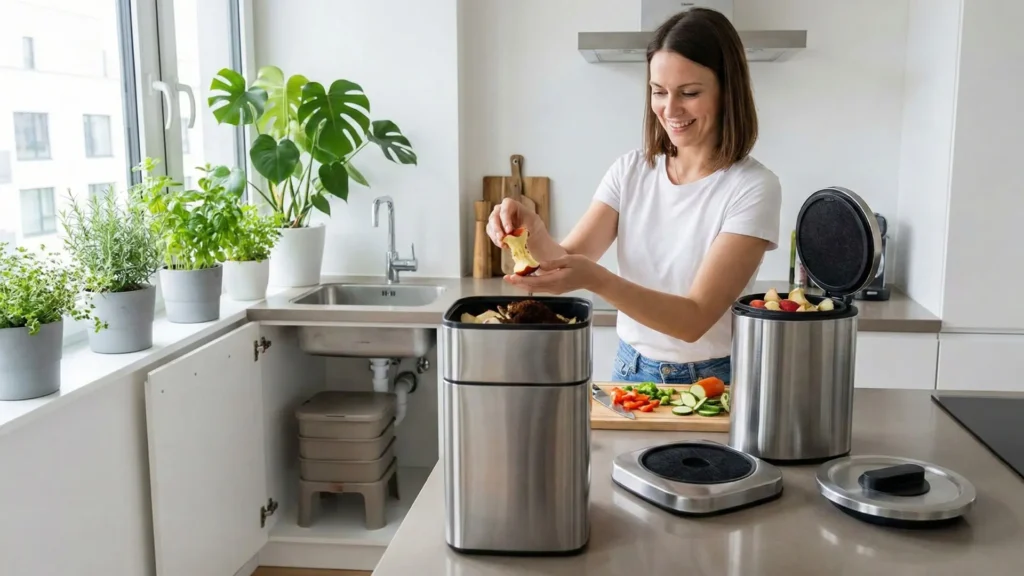
For this method, you just need a countertop bin. But not just any bin. You want one with a charcoal filter in the lid. This filter traps odors inside, so you never smell a thing.
I keep a stainless steel pail on my counter for coffee grounds and eggshells. When it gets full, I pop the bag in the freezer. Yes, the freezer! Freezing your scraps stops the decomposition process instantly. No rot means no smell and absolutely no fruit flies. On Saturday morning, I take my frozen bag to the market. Easy.
Method 2: Vermicomposting (Worm Bins)
Okay, stay with me. I know “worms in the house” sounds like a nightmare, but vermicomposting is the gold standard for apartment composting.
Red Wiggler worms are incredible. They can eat half their body weight in scraps every day. They live in a tiered bin system that can easily fit under your kitchen sink or in a closet.
Here is the cool part: worms don’t smell. They actually eat the bacteria that causes odors. A healthy worm bin just smells like soil. Plus, the “castings” (worm poop) they produce are the most potent fertilizer you can get for your indoor plants.
I started a worm bin two years ago, and it’s surprisingly low maintenance. You feed them your scraps, add some shredded cardboard (from all those Amazon packages), and let them work.
Method 3: The Bokashi Method (The Pickle Jar)
If you cook with a lot of meat, dairy, or citrus, regular composting won’t work well indoors. That is where Bokashi comes in.
Bokashi is a Japanese method that ferments your waste using a special bran inoculated with beneficial microbes. It’s essentially pickling your trash.
You throw your scraps into an airtight bucket, sprinkle a layer of Bokashi bran on top, and seal the lid. Because it’s anaerobic (no air), it doesn’t rot; it ferments. The smell is slightly vinegary but not offensive.
This method is fast. In about two weeks, the waste is broken down enough to be buried in a planter box on your balcony or added to a worm bin. It’s a powerhouse technique for serious apartment composting.
What Can You Actually Compost?
Getting the mix right is key to keeping things odor-free. In the composting world, we talk about “Greens” (nitrogen) and “Browns” (carbon).
The Greens (Kitchen Scraps):
- Fruit and veggie peels (banana skins, apple cores).
- Coffee grounds and paper filters.
- Tea bags (staples removed).
- Crushed eggshells.
- Houseplant trimmings.
The Browns (Dry Bedding):
- Shredded cardboard (toilet paper rolls are great).
- Newspaper (avoid glossy ads).
- Dry leaves (if you have a balcony).
- Sawdust.
For a healthy bin, you want a balance. If your bin starts to smell wet or swampy, you have too many greens. Add more browns to soak up the moisture.
The “Do Not Compost” List: Unless you are using the Bokashi method, keep these OUT of your bin to avoid pests and smells:
- Meat and fish bones.
- Dairy products (cheese, yogurt).
- Oily foods or salad dressings.
- Pet waste.
Controlling the “Pest” Situation
The biggest fear with apartment composting is fruit flies. They are annoying, but preventable.
- Cover Your Scraps: If you have a worm bin, always bury new food scraps under the bedding. Don’t leave a piece of melon sitting on top.
- The Freezer Hack: As I mentioned earlier, freeze your scraps for 24 hours before putting them in the bin. This kills any fruit fly eggs that might already be on the fruit peels.
- Keep it Dry: Fruit flies love moisture. If your bin is too wet, add more shredded paper.
Using Your “Black Gold”
So, you’ve successfully composted. Now what?
If you have a balcony garden, mix the compost directly into your pots. Your tomatoes and basil will grow twice as big. The nutrients in homemade compost are far superior to the chemical fertilizers you buy at the hardware store.
If you don’t have outdoor space, use it for your houseplants. Top-dress your Monstera or Pothos with an inch of fresh compost. Just be careful—it’s strong stuff! A little goes a long way.
For those doing the “Collect and Drop” method, your reward is simply the knowledge that you aren’t contributing to the landfill crisis.
The Modern Tech Solution
If you have the budget and want zero hassle, electric composters are becoming huge in the US and Europe. Brands like Lomi or Mill make countertop appliances that grind and dehydrate your food scraps overnight.
You toss in your dinner scraps, push a button, and wake up to dry, odorless dirt. It uses electricity, so it’s not as carbon-neutral as a worm bin, but for busy professionals, it makes apartment composting effortless.
Final Thoughts
Starting your composting journey might feel intimidating, but it doesn’t have to be perfectly scientific. You might mess up a batch. You might get a few flies. That is okay.
The goal isn’t perfection; it’s participation. Every time you divert an apple core from the landfill, you are doing something good. Whether you choose a simple freezer bag or a full-blown worm farm, apartment composting connects you back to the cycle of nature, even if you live on the 15th floor.
Start small. Maybe just save your coffee grounds this week. Your plants (and the planet) will thank you.
FAQ
Q: Will apartment composting attract cockroaches or mice? A: Not if you do it right. Rodents are attracted to meat, dairy, and oily foods. If you stick to fruit and veggie scraps and keep your bin sealed or well-maintained, pests won’t be interested.
Q: Can I compost in the winter? A: Absolutely! Since your apartment is climate-controlled, your indoor compost bin works year-round. If you have a balcony bin, the process will slow down in freezing temps, but indoor worm bins stay active all winter.
Q: How much space do I need for a worm bin? A: Very little. A standard worm bin is about the size of a carry-on suitcase. It fits easily under a kitchen sink, in a pantry, or in a utility closet.
Q: My compost smells like ammonia. What’s wrong? A: This means it’s too nitrogen-rich (too many greens). Add a lot of “browns” like shredded paper, cardboard, or dry leaves to balance it out and absorb the excess moisture.
Post By SJ Sinan

Leave a Comment