
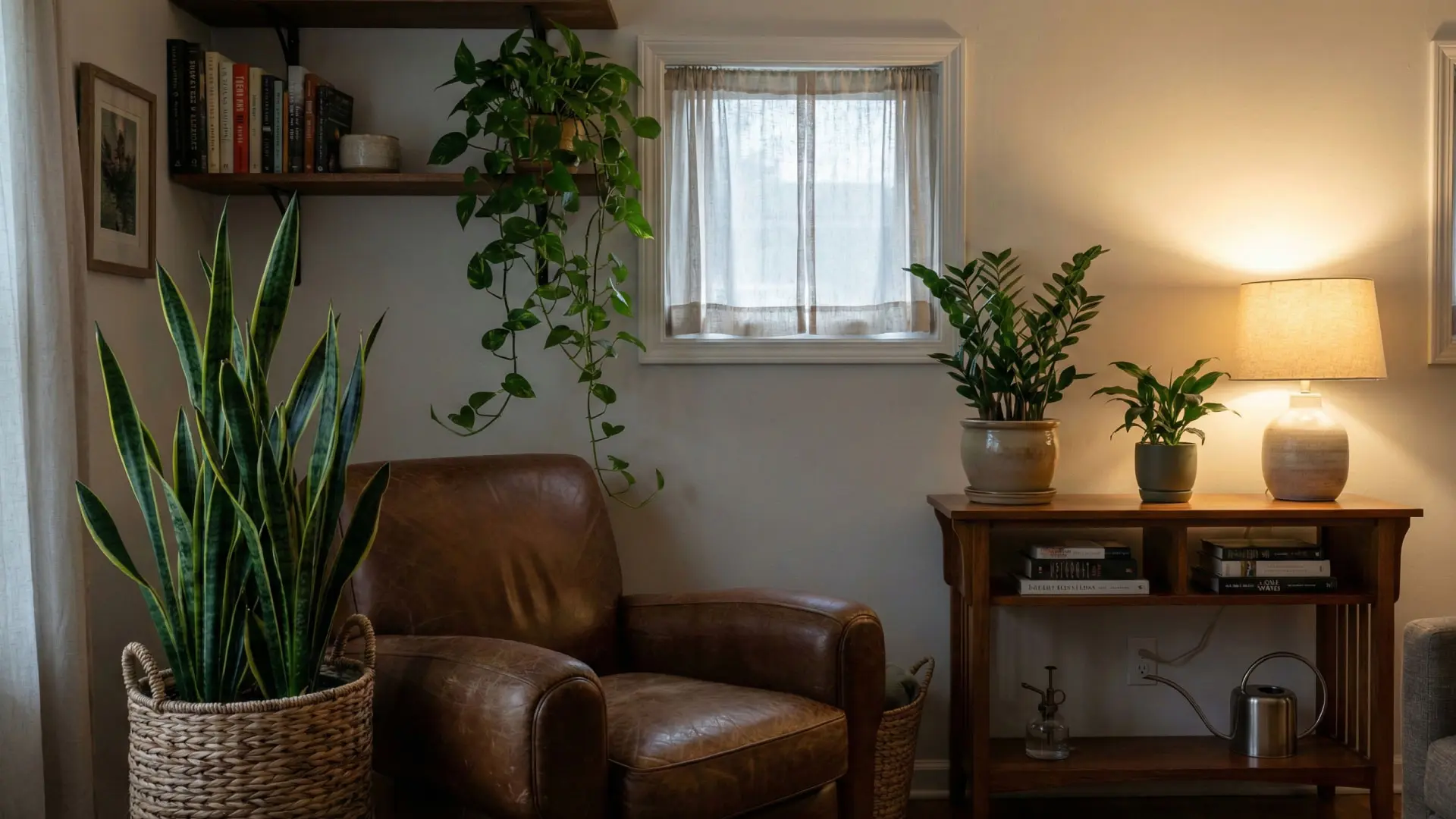

I used to think I was cursed with a “black thumb.” I remember my first apartment in the city—it was a cozy garden-level unit (which is just real estate speak for “basement”). It had one tiny window that faced a brick wall. Every succulent I brought home turned to mush within weeks. I was convinced I just couldn’t keep anything alive.
But here is the truth I wish I knew back then: I wasn’t a plant killer; I was just picking the wrong plants for my space.
If you have a windowless powder room, a dim hallway, or a bedroom that feels more like a cave than a greenhouse, don’t worry. You don’t need blinding sunshine to have a lush, green home. You just need to know which low-light plants are tough enough to handle the shade.
In this guide, I’m sharing my top 8 picks for greenery that actually prefers the darker side of life. Let’s turn those gloomy corners into a jungle.
Why Low-Light Plants Are the Ultimate Home Decor Hack
Before we get to the list, let’s clear up a misconception. “Low light” doesn’t mean “no light.” All plants need some light to photosynthesize. However, the plants on this list are the introverts of the botanical world. They don’t need to be the center of attention in a south-facing window.
Adding low-light plants to your home does more than just fill empty space. It changes the air quality and the vibe of a room instantly. I have a massive Snake Plant in my mudroom, and it completely transforms that utilitarian space into something that feels intentional and styled.
If you are struggling to figure out if your corner is too dark, here is a simple test: Can you comfortably read a book in that spot at noon without turning on a lamp? If yes, you are good to go for these plants.
1. The Indestructible Snake Plant (Sansevieria)
If I had to pick a captain for the low-light plants team, it would be the Snake Plant. This plant is practically unkillable. Seriously, I once forgot to water mine for six weeks while traveling, and it looked even better when I got back.
They grow vertically, which makes them perfect for tight corners or narrow entryways. They can shoot up to 3 or 4 feet tall, adding great architectural height without taking up much floor space.
Care Tip: Ignore it. The only way to kill this plant is with kindness (aka overwatering). Let the soil dry out completely—bone dry—before giving it a drink.
2. The ZZ Plant (Zamioculcas Zamiifolia)
The ZZ plant is often called the “closet plant” because it can survive in conditions that would make other plants wither instantly. It has these gorgeous, waxy, dark green leaves that reflect light, which actually helps brighten up a dim room.
I have one sitting on a shelf in my laundry room—a space that gets zero direct sun—and it pushes out new growth constantly. It’s hardy, resistant to pests, and looks incredibly chic in a modern pot.
3. Pothos (Epipremnum Aureum)
You have probably seen this trailing beauty in offices or cafes. Pothos is one of the most rewarding low-light plants because it grows fast. It’s incredibly satisfying to watch those vines inch their way down a bookshelf or across a mantle.
My favorite variety is the “Neon Pothos” because its bright, lime-green leaves pop against dark walls. It’s tolerant of erratic watering schedules, making it perfect for beginners.
Styling Idea: Place a Pothos on top of a tall cabinet or in a hanging basket in a dim corner. The cascading vines add a soft, organic touch to sharp edges.
4. The Cast Iron Plant (Aspidistra Elatior)
The name says it all. This plant was a favorite in the Victorian era because it could survive the fumes of coal-burning stoves and dark, drafty hallways. If it could survive 19th-century London, it can definitely survive your hallway.
The Cast Iron Plant has wide, strappy leaves that grow about 2 feet tall. It’s slow-growing, so you won’t need to repot it often. It’s distinct from other low-light plants because it’s not just tolerant of shade; it actually hates direct sun, which can scorch its leaves.
5. Peace Lily (Spathiphyllum)
Okay, I have to be honest—the Peace Lily is a bit of a drama queen. If you miss a watering by one day, it will droop dramatically over the side of the pot like it’s fainting. But the second you give it water? It perks right back up within an hour.
Despite the drama, it’s one of the few low-light plants that flowers indoors. It produces lovely white blooms that look elegant in a bedroom or bathroom.
Pro Tip: Peace Lilies love humidity. If you have a bathroom with a small frosted window, this plant will be in heaven there.
6. Boston Fern (Nephrolepis Exaltata)
Speaking of bathrooms, let’s talk about ferns. Most people kill ferns because they let them get dry. Ferns need moisture.
The Boston Fern is a classic lush, feathery plant that thrives in indirect light. It’s not great for a dry basement, but for a humid bathroom? It’s perfect. The steam from your shower mimics its natural tropical habitat.
I keep a mister bottle nearby and give my fern a little spritz every other morning. It keeps the fronds from turning brown and crispy.
7. Spider Plant (Chlorophytum Comosum)
This is the plant that keeps on giving. The Spider Plant is famous for producing “pups”—tiny baby spider plants that dangle from the mother plant. You can snip these off, put them in water, and voilà, you have free gifts for your friends.
It’s adaptable and forgiving. While it grows faster in bright light, it holds its own perfectly well as one of your go-to low-light plants. It adds a fun, retro texture to any room.
8. Lucky Bamboo (Dracaena Sanderiana)
If you really, truly don’t want to deal with soil, Lucky Bamboo is your answer. You can grow this straight in a vase of water with some pebbles for stability.
It’s sculptural and zen. I love using Lucky Bamboo in powder rooms where counter space is limited. A simple glass cylinder with three stalks looks clean and spa-like. Just remember to change the water every couple of weeks to keep it fresh.
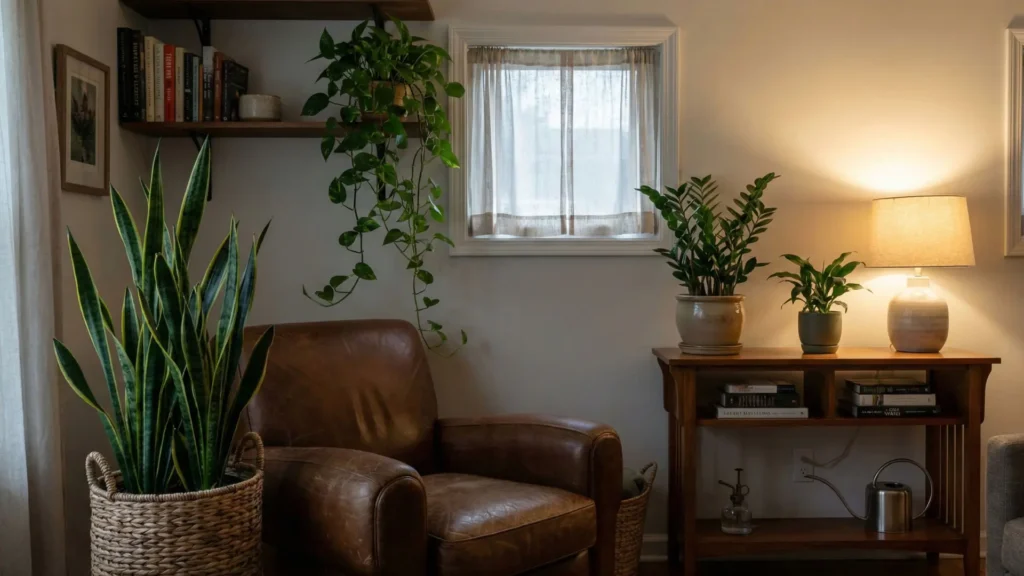
Trailing Pothos plant on a bathroom shelf.
ZZ plant styling ideas for modern home decor.
Boston Fern hanging in a humid bathroom with frosted glass.
Care Tips for Your Shadow Garden
Keeping low-light plants alive requires a slightly different mindset than caring for sun-lovers. Since they get less light, they have less energy to burn through water.
- Water Less, Not More: The number one killer of shade plants is root rot. Because they aren’t photosynthesizing rapidly, the soil stays wet longer. Always check the top inch of soil with your finger before watering.
- Dust is the Enemy: In low light, every photon counts. If your plant’s leaves are covered in dust, they can’t absorb the limited light available. Wipe the leaves down with a damp cloth once a month.
- Rotate Frequently: These plants will lean toward whatever light source exists. To keep them growing straight, give the pot a quarter turn every time you water.
Designing with Dark-Corner Plants
Don’t just shove a pot in the corner and call it a day. Use these plants to solve design problems.
Is your basement media room feeling cold and sterile? A large Snake Plant in a woven basket adds instant warmth. Is your home office feeling stuffy? A Pothos on the shelf brings life to the space without taking up desk real estate.
Integrating low-light plants into your decor bridges the gap between the outdoors and your cozy interior sanctuaries.
Key Takeaways
- Assess Your Light: Low light means you can read a book, not pitch black.
- Pick the Right Fighter: Go for Snake Plants or ZZ Plants if you are a beginner.
- Watch the Water: Overwatering is the biggest threat in low-light conditions.
- Use Vertical Space: Hanging planters and tall stands help plants catch more ambient light.
You don’t need a greenhouse to be a plant parent. By choosing the right green companions, you can breathe life into even the dimmest corners of your home.
FAQ
Q: Can these plants survive with no windows at all? A: Technically, no plant can survive in total darkness forever. However, low-light plants like the ZZ plant or Snake plant can survive for a long time with very minimal light. For windowless rooms, I recommend rotating your plants every few weeks (move them to a brighter room for a “vacation”) or using a simple grow light bulb in a regular lamp.
Q: Why are my low-light plants turning yellow? A: Yellow leaves usually mean one of two things: overwatering or pests. In low light settings, it is almost always overwatering. Let the soil dry out. If the soil is dry and they are still yellow, check for spider mites.
Q: Do low-light plants grow slowly? A: Yes. Because they receive less energy from the sun, they grow much slower than they would in bright spots. Don’t panic if you don’t see new leaves for a while; they are just pacing themselves.
Q: What is the best fertilizer for shade plants? A: Since they grow slowly, they need less food. Dilute a standard houseplant fertilizer to half-strength and only feed them during the growing season (spring and summer). Never fertilize in winter.
Post By SJ Sinan

Leave a Comment